Modern and Classical Iranian Poets
Classical and Early Iranian Poets – Masters of Classical and Modern Iranian Literature and Their Profound Philosophical Influence on World Literature

Famous Iranian Poets Iranian Poets
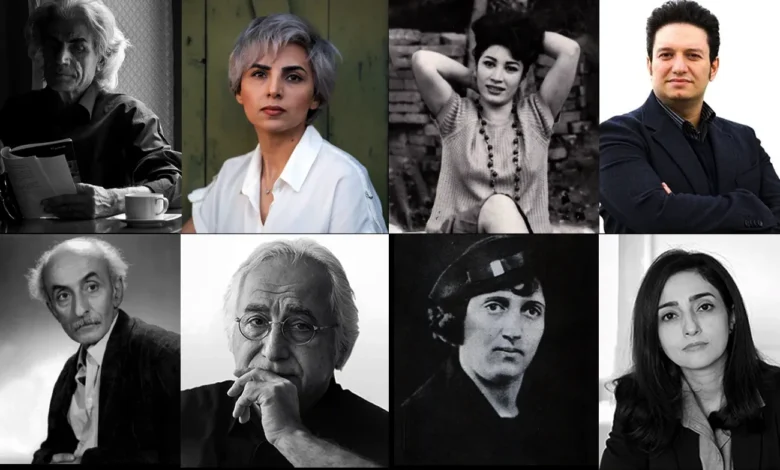
Iranian poets represent a powerful tradition in world literature that combines profound philosophical meanings, love, mysticism, and social criticism. Iranian poetry, from the classical period to the modern age, has influenced both Eastern and Western literature, creating a universal legacy. This article offers a comprehensive overview of Iranian poets , focusing on their most famous works and those of modern Iran.
Who is Iran’s most famous poet?
While this question might be answered with a single name, literary reality is somewhat more stubborn. Internationally, Mevlana Celaleddin Rumi is considered Iran’s most famous poet. However, there are many other great names who have stood out in different periods of Iranian literature.


Who is the National Poet of Iran?
In Iran, the name most frequently mentioned when referring to the “national poet” is Ferdowsi . His work, the Shahnameh , is considered a cornerstone of Iranian identity, language, and mythology. Ferdowsi became a symbol of literary resistance by protecting the Persian language from Arabic influence.
Ferdowsi (940–1020)
Ferdowsi is regarded as the literary architect of Iranian national identity . He dedicated his life to writing the Shahnameh , which recounts Iranian mythology and history . This work is not only an epic but also the written memory of Iranian culture.
His works:
Shahnameh
Classical Period Iranian Poets
Rumi – Jalal ad-Din Muhammad Rumi (1207–1273)
Rumi is among the most influential Iranian poets who transformed Sufi poetry into a universal language. Themes of love, God, humanity, and existence are prominent in his poems. He is one of the most widely read poets today.
To which country does Rumi belong?
Rumi was born in 1207 in Balkh, a city located within the borders of present-day Afghanistan . He spent most of his life in Anatolia, making Konya his spiritual center, and passed away there. In contemporary Turkish culture, Mevlana is considered one of the most important representatives of the Anatolian Sufi tradition and an integral part of Turkish cultural heritage. However, most of Mevlana’s literary works were written in Persian, and his poetic language is based on the classical Iranian-Persian literary tradition. In this respect, Mevlana is regarded as a universal thinker and poet who cannot be reduced to a single nation or language, transcending borders. His teachings are a shared cultural heritage of Anatolia , Iran , and the Islamic world .
His works:
- Masnavi-I Ma’navi (The Masnavi)
- Divan-e Shams-e Tabrizi (The Works of Shams of Tabriz)
- Fihi Ma Fihi
Hafez Shirazi (1315–1390)
Hafez-i Shirazi is one of the most important ghazal poets in Iranian literature, and his works carry not only a literary but also a cultural and social function. His poems explore themes of love, fate, divine irony, and human inner conflicts with subtle symbolism. Hafez’s language is multifaceted; the same couplet can contain both worldly and mystical meanings.
Hafez-i Shirazi lives on in Iranian culture not only as a poet but also as a central figure in the “Hafez Divination” tradition. In Iran, on important days, especially Nowruz , Yalda Night , and during moments of personal uncertainty, the Divan of Hafez is randomly opened for divination. It is believed that the ghazal read offers symbolic guidance regarding one’s intentions.
His works:
- The Divan of Hafez
- The Oracle (The Tongue of the Hidden)
- Ghazal
Saadi of Shiraz (1210–1292)
Saadi of Shiraz is among the Iranian poets who expressed wisdom, morality, and human nature in the simplest and most universal way in Iranian literature. Born in Shiraz, Saadi went to Baghdad at a young age and received his education at the Nizamiyeh Madrasa, after which he traveled extensively for many years, covering a vast geographical area encompassing the Middle East, Central Asia, India, and Anatolia. These journeys instilled in his works a profound observation of humanity and a universal perspective.
His works:
- Gulistan (The Rose Garden)
- Bustam (The Orchard)
Modern Iranian Poets
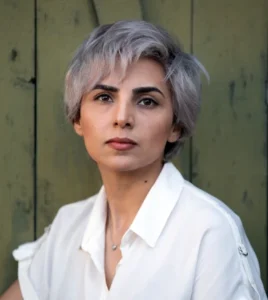
Fatemeh Ekhtesari (1986– )
Fatemeh Ekhtesari is an Iranian contemporary woman poet and one of the most controversial and radical voices in modern Iranian poetry. Her work is explicitly political and feminist, with a strong focus on systemic criticism. Her poetic language is deliberately sharp, direct, and unsettling, often challenging the reader rather than offering comfort.
Due to censorship, political pressure, and judicial persecution in Iran, she was subjected to sustained public targeting and was ultimately forced to live outside the country. Her poetry explores the tension between personal experience and structural oppression, with particular emphasis on the female body, power, freedom, and the political nature of language itself.
His works:
- Childrenhoods of a Woman
- Political Love Poems
- You Fall Asleep with Your Eyes Closed
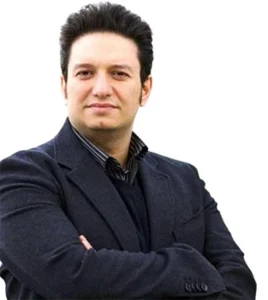
Garous Abdolmalekian (1980– )
Garous Abdolmalekian is one of the most internationally recognized poets of the new generation of Iranian poetry. With a minimalist style and short, condensed lines, he represents a defining voice in contemporary Iranian poetry. His poems have been translated into numerous languages.
His works:
- The Whistle of the World
- In the Middle of Nothing
- Fresh Wounds
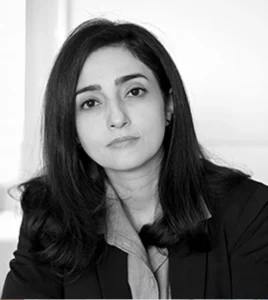
Pegah Ahmadi (born 1974, Tehran)
Pegah Ahmadi is an Iranian poet, literary critic, and poetry translator. She showed an interest in writing poetry from an early age, and her first poem was published at the age of seventeen in Takapu, one of the leading literary magazines of the time.
Her first poetry collection, On the Final G String, was published in Iran in the late 1990s and received critical acclaim from poets and literary critics. Ahmadi holds a bachelor’s degree in Persian Language and Literature from Islamic Azad University, Tehran, and is considered one of the prominent poets of Iran’s so-called “1990s generation.”
To date, she has published several poetry collections in Persian and German, as well as literary criticism, reviews, translations, and one authored work focused on Iranian women poets. Many of her poems have also been republished in Persian and non-Persian poetry anthologies.
In 2009, Ahmadi traveled to Germany at the invitation of PEN Germany. She later continued her literary research in the United States following an invitation from Brown University. She currently resides in Germany.
Eserleri:
- On the Final G String (1999, Tehran)
- Cadence (2001, Tehran)
- These Days of Mine Are a Throat (2003, Tehran)
- Marginal Notes on a Domestic Wall (2004, Paris)
- I Was Not Cold (2010, Germany, bilingual Persian–German edition)
- Intensity (2018, Paris, bilingual Persian–German edition)
- So This Was the Future (2024, Germany, in German)
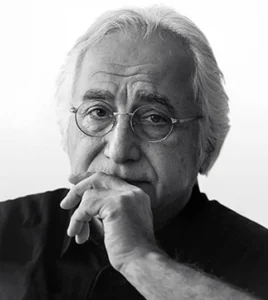
Shams Langroudi (1950– )
Shams Langroudi is a contemporary Iranian poet, researcher, actor, singer, and literary historian. He was born on November 17, 1950 in Langarud, Iran, into a culturally engaged family. After completing his education in economics and business, he began publishing poetry in the mid-1970s. His early works introduced his voice to Iranian literary circles, and over the following decades he became known as a leading figure in modern Persian poetry with innovative imagery and engagement with social themes.
In addition to poetry, Langroudi has served as a university lecturer in art history and worked across multiple creative fields, including acting in films. His literary contributions encompass numerous poetry collections published over several decades, and his work often blends everyday experience with broader social and imaginative concerns.
Eserleri:
- Thirst Behavior (1976)
- In the World’s Moonlight
- Ashes and the Lady
- The Ode of the Torn Smile
- Notes for the Wooden Nightingale
- Fifty-Three Love Songs
- The Gardener of Hell
- I Shall Die for Still Being Alive
- Night Is a Public Mask
- Songs of a Wingless Angel
- The Balance of the Day on My Fingers
- The Book of Music
- The White Train
- Dancing with a Fake Passport
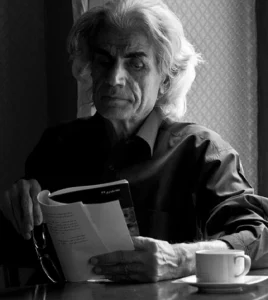
Ali Babachahi (1942– )
Ali Babachahi is an Iranian poet, writer, researcher, and literary critic known as one of the most influential figures in contemporary Persian literature. Born in Bushehr, Iran, he showed early literary talent and published his first poetry in the late 1960s. Over the decades, Babachahi has worked across poetry, literary criticism, and research, and has played a key role in developing postmodern poetic discourse in Iran. He has also served as poetry editor and workshop leader for literary magazines and remains active in Iran’s cultural scene.
Babachahi’s work is marked by linguistic experimentation, conceptual depth, and a willingness to challenge conventional forms, earning him a reputation as a leading theorist-poet of modern Persian verse. He has published around thirty books of poetry alongside essays and research, and his poems have been translated into multiple languages.
Eserleri:
- In the Supportless Place (Dar Bi-Takyeh-Gāhi
- World and Its Sad Lights (Jahān va Roshanāyi-hāye Ghamnāk)
- From the Generation of the Sun (Az Nasl-e Aftāb)
- The Sound of Sand (Sedā-ye Shen)
- Sun Rises From Our Soil (Az Khāk-emān Aftāb Bar Miāyad)
- The Voices of Seafarers (Āvāye DaryāMardān)
- Sea Dwellings Without Marks (Manzel-hāye Daryā Bi-Neshān Ast)
- Drizzle Rain (Nam Nam-e Bārān)
- My Mind Torments Me (Aghl Azābam Midahad)
- My Face, Which Is Very Suspicious (Qiyāfe-am Ke Kheyli Mashkook Ast)
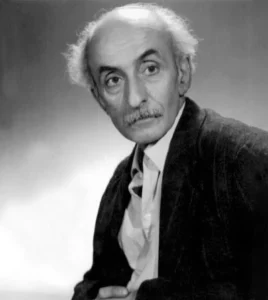
Nima Yooshij (1896–1960)
Nima Yooshij, born Ali Esfandiari on November 12, 1896 in Yush village in northern Iran, is widely regarded as the father of modern Persian poetry. He revolutionized Persian verse by breaking away from rigid classical meters and introducing what became known as She’r-e Nimaa’i (New Poetry), which allowed variable line lengths and freer rhythmic structures. His innovations had a lasting impact on 20th-century Persian literature and paved the way for generations of modern Iranian poets.
Despite early resistance from traditionalists, Yooshij’s work gained influence over time through publications in literary journals and later collections. He continued to experiment with form and language throughout his life, making his poetry a cornerstone of modern Iranian literary expression. He died on January 6, 1960 in Tehran and was buried in his native village of Yush.
Eserleri:
- Afsaneh (Myth)
- Ey Shab (O Night)
- Quqnūs (The Phoenix)
- Ghorāb (The Crow)
- Selections from early narrative poems
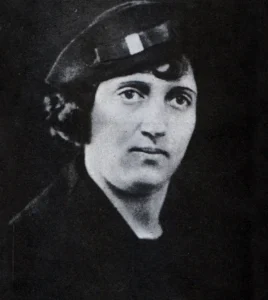
Pervin Etesami (1907–1941)
Parvin Etesami was one of the most significant female poets in Iranian literature, known for bridging classical Persian poetic forms with a modern ethical and social sensibility. Born in Tabriz, she was raised in an intellectual and literary family; her father, Yusuf Etesami, was a prominent scholar and translator who played a key role in shaping her early literary development.
Despite her short life, Etesami left a lasting legacy through poems that address morality, justice, inner human conflict, women’s identity, and social inequality. While maintaining classical structures, her poetry introduced a critical and reflective voice, making her a pioneering female figure in the transition toward modern Iranian poetry.
Eserleri:
The Divan of Parvin Etesami (Divān-e Parvin Etesami)
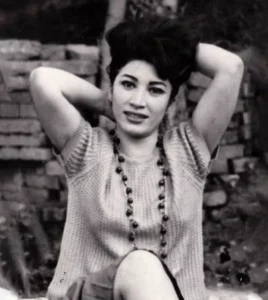
Forough Farrokhzad (1935–1967)
Forough Farrokhzad was one of the most influential and controversial figures of modern Iranian poetry. Despite her short life, she profoundly transformed Persian literature by placing women’s identity, personal freedom, love, and existential inquiry at the center of poetic expression. Her work openly challenged traditional moral and social norms, marking a decisive rupture in twentieth-century Iranian poetry.
Farrokhzad’s poetry combined the personal with the philosophical and political, introducing a bold, confessional voice that reshaped the boundaries of poetic language in Iran. Her innovative style and uncompromising vision established her as a central figure in the development of modern Persian literature.
Eserleri:
- The Captive (Asir, 1955)
- The Wall (Divar, 1956)
- Rebellion (Osyan, 1958)
- Another Birth (Tavallodi Digar, 1964)
- Let Us Believe in the Beginning of the Cold Season
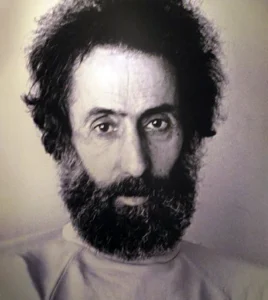
Sohrab Sepehri (1928–1980)
Sohrab Sepehri was one of the most distinctive figures of modern Iranian poetry, renowned for his contemplative engagement with nature, solitude, and inner exploration. His poetry is marked by a minimalist style and a philosophical tone that favors silence, simplicity, and reflection over rhetorical intensity.
Influenced by Eastern philosophy, particularly Buddhism and Persian mysticism, Sepehri’s work dissolves the boundaries between the human self and the natural world. This spiritual and introspective approach established him as a singular voice in twentieth-century Persian literature.
Eserleri:
- Hasht Ketab (Eight Books)
- Sedâ-ye Pâ-ye Âb (The Sound of Water’s Footsteps)
Who Are Iran’s Notable Figures?
Iran is known not only for its poets but also for its philosophers, filmmakers, and artists across many disciplines. Nevertheless, in the field of literature, figures such as Ferdowsi, Jalāl ad-Dīn Rumi, Hafez, and in the modern era Forough Farrokhzad stand out as the most influential representatives of Iran’s cultural and intellectual identity.
Iranian poets are not only central to Persian literary history but also form a foundational part of the world’s cultural heritage. Spanning from classical epic traditions to modern free verse, this long-standing poetic lineage continues to engage with humanity’s shared questions through the language of poetry. For those seeking to understand Iranian literature, beginning with Iranian poets offers the most direct and meaningful entry point.