


The US-Iran War is Reshaping The Global Cybersecurity Agenda
how The US-Iran War , cyber conflict is reshaping global cybersecurity, AI defense systems, and digital warfare strategies

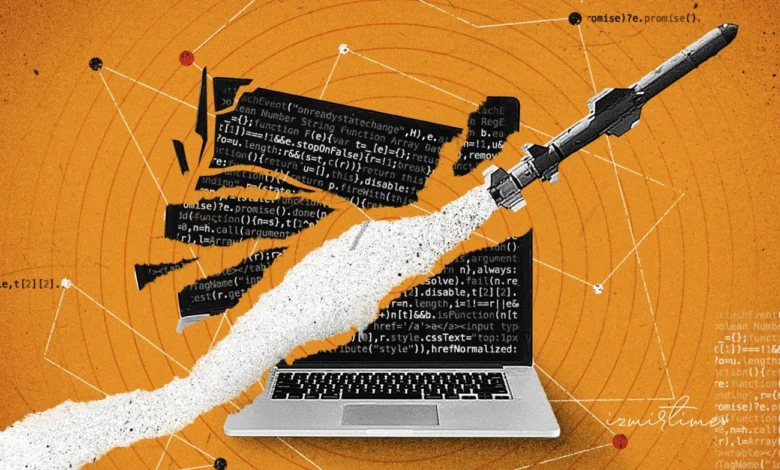
How The US-Iran Cyber Conflict Is Changing Global Cybersecurity
Modern warfare no longer unfolds only through missiles, tanks, and airstrikes. Today, cyberspace has become a parallel battlefield where nations, proxy groups, intelligence agencies, and even loosely organized hacker collectives compete for dominance. The growing cyber confrontation linked to the United States and Iran has transformed global cybersecurity priorities and forced governments, corporations, and technology leaders to rethink digital defense strategies. What once seemed like isolated cyber incidents has evolved into a continuous state of hybrid warfare involving artificial intelligence, cyber espionage, infrastructure attacks, digital propaganda, and psychological operations.
One of the most important developments emerging from this conflict is the normalization of cyber warfare as a first-strike mechanism. Cyber operations are now frequently deployed before physical military actions in order to disrupt communications, blind surveillance systems, manipulate information flows, and weaken critical infrastructure. Energy systems, financial institutions, transportation networks, telecommunications providers, and healthcare infrastructures have become primary cyber targets. This transformation has forced cybersecurity agencies worldwide to abandon older defensive models and adopt real-time cyber resilience strategies capable of responding to machine-speed attacks. Humanity spent decades building “smart infrastructure” and approximately eleven minutes securing it properly. Spectacular planning, truly.

Using AI for hacks
Artificial intelligence has significantly accelerated this transformation. Iranian-linked cyber groups and other state-aligned actors are increasingly using AI-enhanced malware, automated phishing systems, intelligent reconnaissance tools, and adaptive attack techniques capable of bypassing traditional security defenses. AI allows threat actors to analyze massive amounts of data, identify vulnerabilities faster, generate convincing deception campaigns, and automate attacks at a scale previously impossible. Cybersecurity experts now warn that AI-driven cyberattacks are becoming more sophisticated, more difficult to detect, and psychologically more manipulative. The battlefield is no longer limited to systems and servers; it increasingly targets trust, perception, and public confidence.
The conflict has also blurred the distinction between nation-state cyber operations and independent hacker activism. Many cyber campaigns linked to the US-Iran conflict are conducted through decentralized networks of proxy actors, hacktivist organizations, and semi-independent cyber groups. These actors often operate under unofficial banners while pursuing objectives aligned with geopolitical interests. This creates a complex cybersecurity environment in which attribution becomes difficult, retaliation becomes legally ambiguous, and cyber escalation becomes harder to control. Governments are now confronting the reality that cyber conflicts can expand globally without formal declarations of war. A laptop connected to the internet has effectively become a geopolitical instrument. Humanity really did look at global connectivity and decide, “What if every toaster could participate in international conflict?”
Another major concern emerging from the conflict is the vulnerability of critical infrastructure and global supply chains. Cyberattacks targeting infrastructure can create disruptions far beyond the immediate conflict zone. Attacks on undersea cables, cloud providers, logistics systems, payment infrastructures, and industrial control systems can trigger cascading international consequences affecting businesses and civilians worldwide. Experts increasingly warn that geopolitical cyber conflicts are no longer regional issues; they represent systemic global risks capable of disrupting economic stability, digital commerce, and international communication networks. As a result, multinational corporations are investing heavily in cyber resilience, zero-trust architecture, threat intelligence systems, and AI-driven defense technologies.
The growing role of AI agents inside organizations has introduced an entirely new cybersecurity challenge. Companies are no longer securing only human users and software applications; they must now manage autonomous or semi-autonomous AI systems capable of making decisions, accessing sensitive information, and interacting across networks. This has intensified debates surrounding AI governance, digital identity management, regulatory oversight, and ethical cybersecurity frameworks. Industry leaders and policymakers increasingly argue that cybersecurity can no longer be treated as a purely technical discipline. It has become a strategic issue connected directly to national security, economic stability, corporate governance, and geopolitical power.
when might a cyberattack warrant a direct military response?
The US-Iran cyber confrontation has also reshaped international discussions around cyber deterrence and digital warfare laws. Governments and security organizations are debating when a cyberattack should justify military retaliation and whether attacks on digital infrastructure should be considered acts of war under international law. As cyberattacks become capable of shutting down hospitals, financial systems, or power grids, the boundary between virtual disruption and physical harm continues to disappear. This legal and strategic uncertainty is forcing countries to modernize cybersecurity doctrines and redefine military preparedness for the digital age.
Ultimately, the US-Iran conflict demonstrates that cybersecurity is no longer a secondary layer of defense. It has become a central pillar of modern geopolitical strategy. Governments, enterprises, and institutions that fail to adapt to this evolving cyber landscape risk becoming vulnerable not only to technical disruption but also to economic destabilization, reputational damage, and strategic manipulation. The era of cyber warfare is no longer theoretical. It is active, global, AI-enhanced, and deeply intertwined with the future of international security. Unfortunately, humanity continues insisting on connecting every critical system imaginable to the internet first and considering consequences later. A species absolutely committed to turning convenience into an existential experiment.